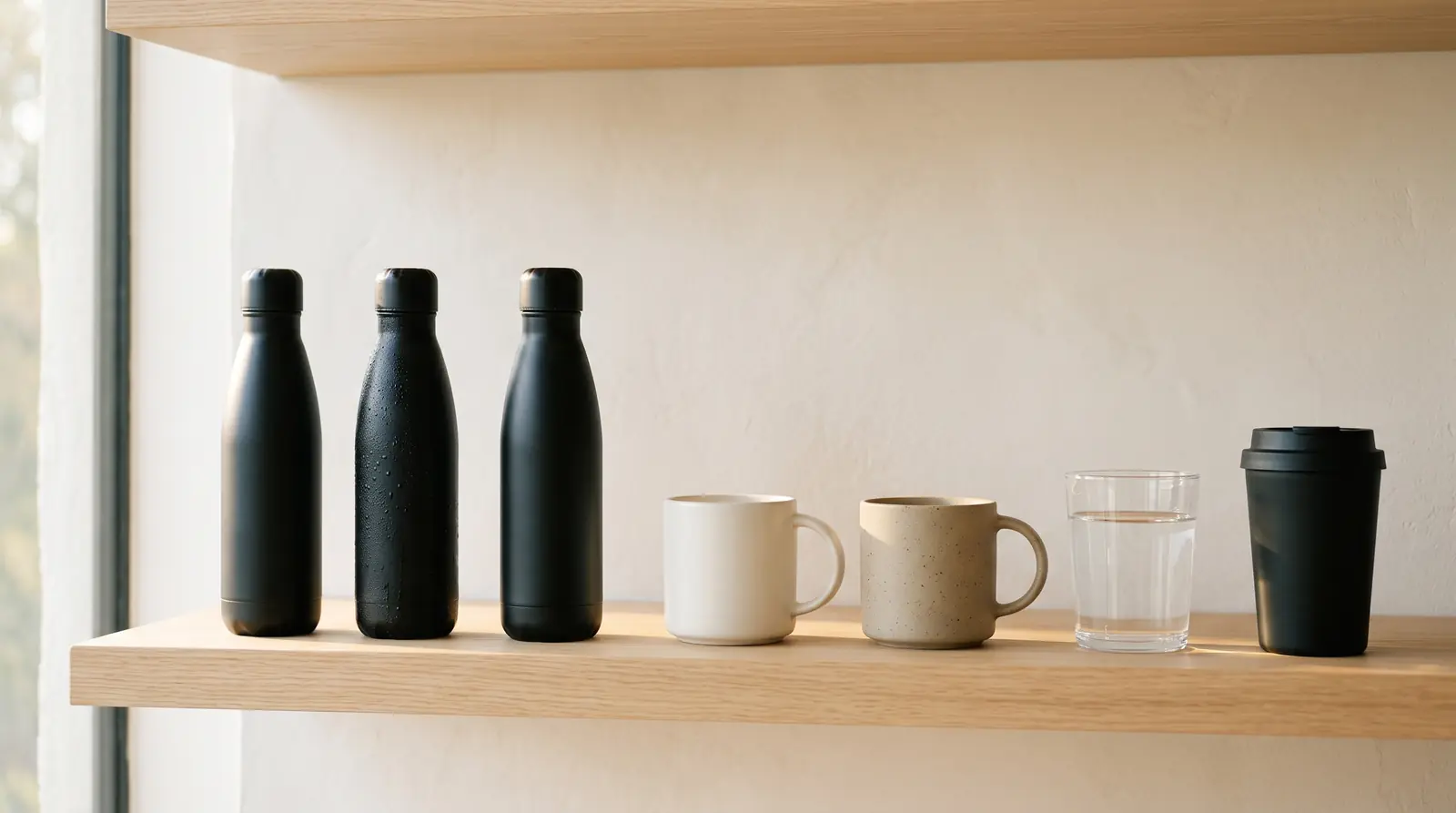
Sets de bebida
Botellas, tazas y vasos térmicos. La categoría más pedida del catálogo, porque es la que más se usa: una botella acaba en la mesa de todas las reuniones del año.
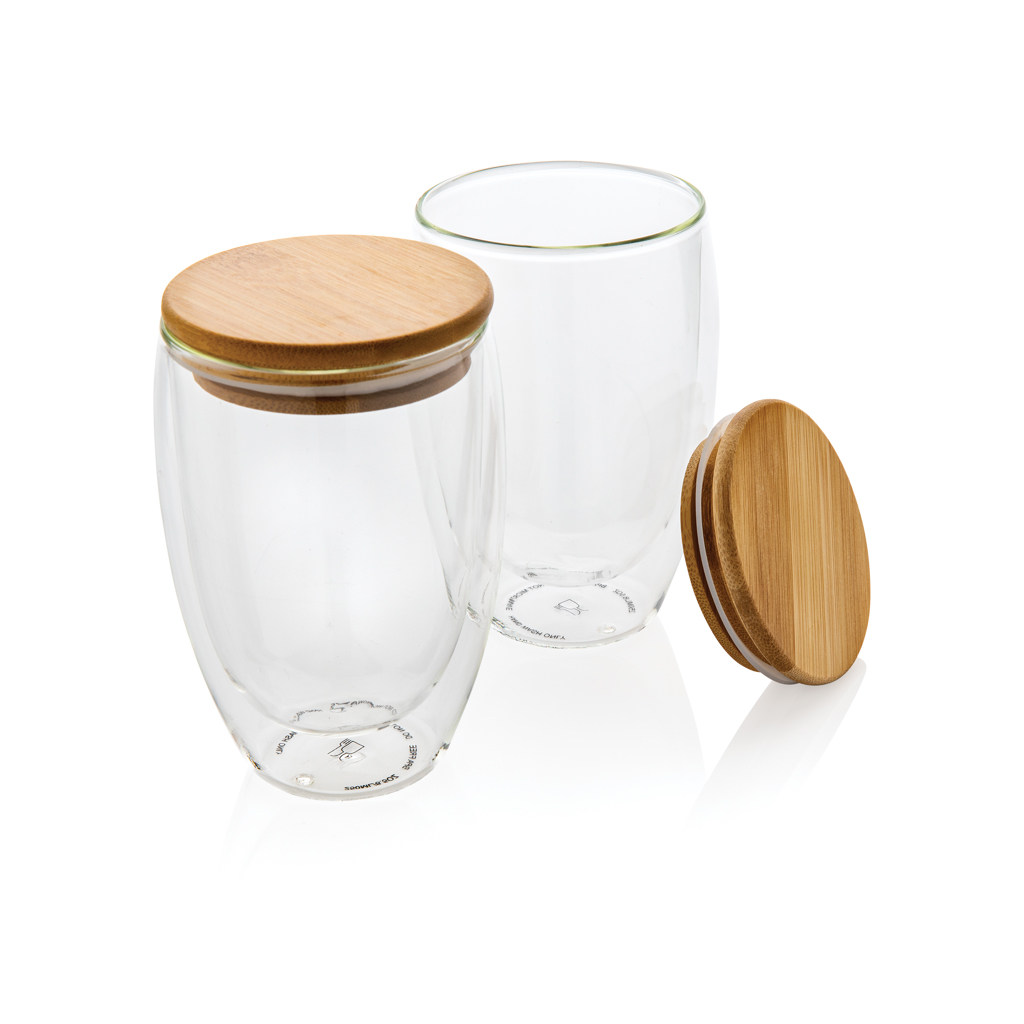
Cómo elegimos
El acero se nota al segundo sorbo.
La diferencia entre una botella que conserva el frío ocho horas y una que lo pierde en dos está en el vacío entre paredes, no en el precio. Pedimos la ficha técnica con las horas reales de conservación y la comparamos con lo que promete el catálogo.
- Acero inoxidable 18/8, no aleaciones sin nombre
- Horas de frío y calor declaradas y contrastadas
- Tapa sin plásticos con bisfenol A
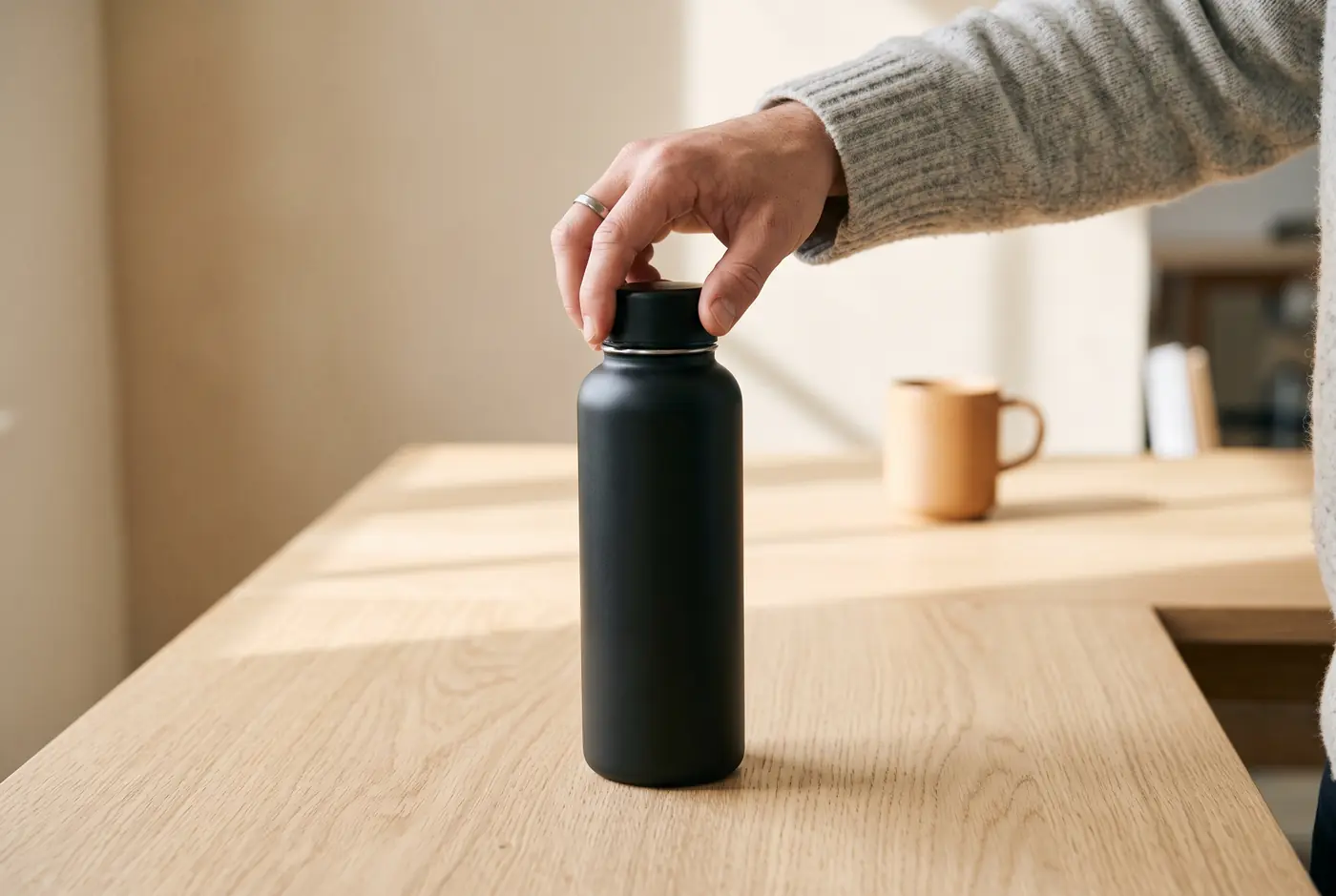
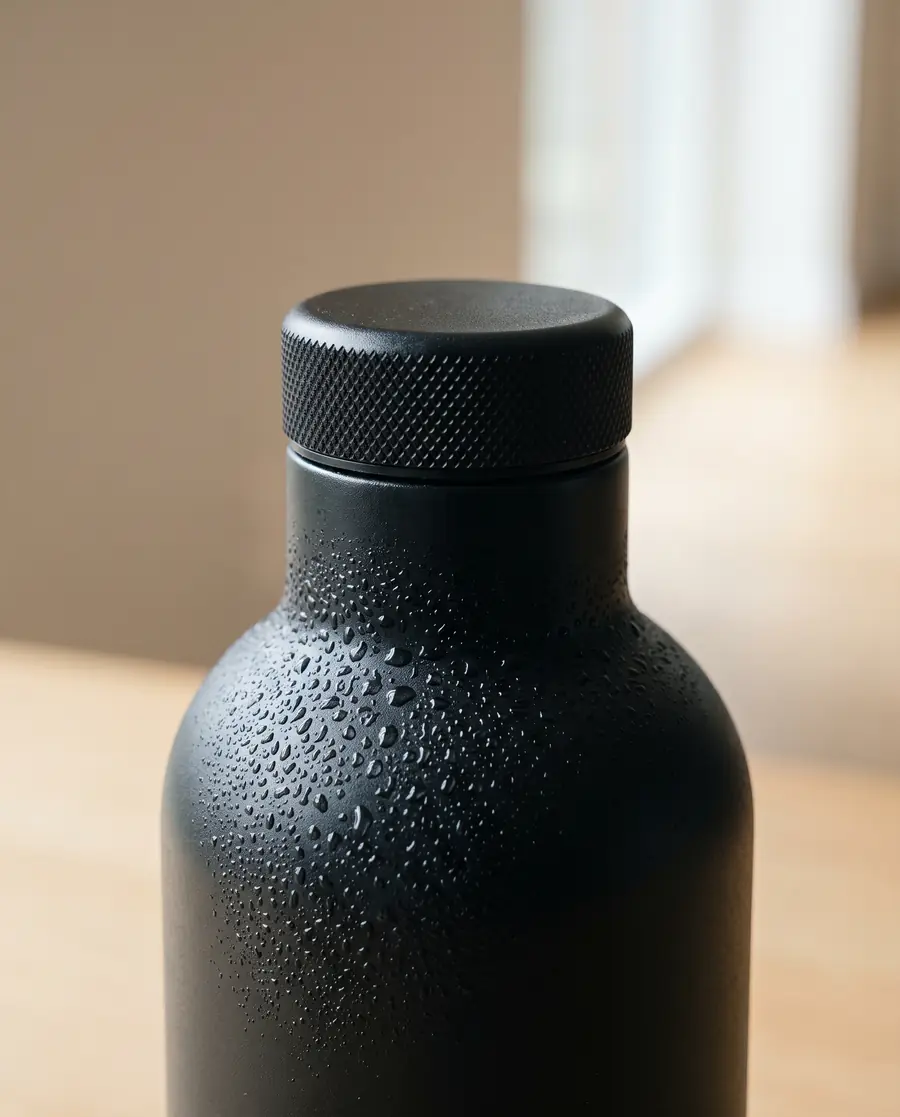
Todo el catálogo de sets de bebida se marca en Europa, con entrega en el plazo que cerramos contigo.
El detalle
El grabado no se va con el lavavajillas.
Sobre acero, el láser deja la marca en el propio metal. Es más sobrio que la serigrafía y sobrevive al uso diario.
Frequently asked questions about Drinkware
If yours is not here, write to us. People answer, not an automatic form.
Single-wall or double-wall bottle?
Single-wall weighs less and costs half as much, but it sweats on the outside and cold water warms up within an hour. Vacuum double-wall doesn't condensate and holds the temperature for hours. For the office, single-wall does the job; for people on the move, double-wall is the one that actually gets used.
How many hours does a thermal bottle keep drinks cold and hot?
A vacuum double-wall bottle keeps things cold for eight to ten hours and hot for five to six. The difference lies in the vacuum between the walls, not the price: we ask for the technical sheet with the real retention hours and compare it with what the catalogue promises.
Does the logo on a personalised bottle or mug survive the dishwasher?
It depends on the technique. On steel, laser engraving marks the metal itself and never wears off. Colour printing holds up well if it's oven-fired; printing that only has a varnish coat gets scratched in the dishwasher. On ceramic, fired marking is the only kind that survives daily use in an office.
What materials do we look at in a reusable bottle?
18/8 stainless steel, which is food-grade and leaves no metallic taste; a silicone seal, which doesn't dry out or pick up odours the way rubber does; and a lid free of bisphenol-A plastics.
What's the first thing to break on a bottle?
The lid, almost never the body. We check that the thread has a long pitch, that the seal is silicone, and that the lid can be taken apart for cleaning. If it has a straw or spout, we check that spare parts are available.
Catálogo ampliado
¿No encuentras lo que buscas?
Publicamos una parte. Trabajamos con varios fabricantes europeos y podemos buscar una referencia concreta, un color que no está o una cantidad grande con fecha cerrada.